
Find Springfield Township Residents
Springfield Township has no one municipal resident roll. The useful trail is split across Hamilton County property, recording, court, election, and probate records, with older household evidence at the Cincinnati and Hamilton County Public Library. Match the record to the question. A parcel can identify a deeded owner, a voter result can confirm a registration match, and a directory entry can place someone at an address in a particular year. Those roles do not mean the same thing.
Start from a full name, a street address, or a date range. Keep the source date and the role shown by each result. This is important because Township addresses can use a Cincinnati postal name, while older sources may instead use New Burlington, Woodlawn, Glendale, Mount Healthy, or a rural-route label.
- Search the Hamilton County Auditor Property Search by owner, address, or parcel when the starting point is a property.
- Use the Recorder’s Acclaim inquiry to connect a parcel or legal description to recorded parties and documents.
- Check the Ohio voter lookup when you need to confirm a specific registration using first name, last name, and Hamilton County.
- For a past household, search the library’s city and county directory collections, then compare adjacent years and a census date.
- When a needed Township file is not online, ask its actual custodian for a narrow record by date, address, incident, parcel, or document number.
Springfield Township Records Offices
Hamilton County keeps the core records behind a Springfield Township residents directory. The Auditor leads from a street or parcel to a deeded owner and tax context. The Recorder holds the recorded document trail. The Board of Elections and Secretary of State provide voter-registration pathways with statutory limits. Township offices retain their own local administrative, zoning, police, fire, and code records, but they do not replace County deed, tax, court, or voter systems.
Hamilton County Recorder
138 E. Court St., Room 205
Cincinnati, OH 45202
513-946-4571
Hamilton County Auditor
138 E. Court St., Room 304
Cincinnati, OH 45202
Property research is online
Springfield Township Administration
9150 Winton Road
Cincinnati, OH 45231
513-522-1410, Monday–Friday 8 a.m.–5 p.m.
Springfield Township Parcel Clues
The Auditor’s search is the best official address starting point. Its Owner, Street Address, Parcel ID, Sales, and Advanced modes serve different tasks. Enter the bare street name without its suffix. An exact or low house number can find one property, while low and high numbers can return a range. Broad results stop at 1,000, so a long street needs a narrower search before it becomes a useful segment.
A selected card can show owner and mailing address, situs address, parcel ID, transfer details, appraisal information, land use, tax district, school district, and legal description. A situs address is the physical parcel location; a mailing address is where correspondence goes. Neither turns a property record into a full household list.
| Auditor field | Local behavior | Useful result |
|---|---|---|
| Owner / Organization | Last name first; partial input accepted | Deeded owner’s parcels |
| House number and street | No suffix; low/high makes a range | One property or block segment |
| Parcel number | Most local IDs have 13 characters; partial works | County record join point |
| Transfer fields | Book/page, sale date, price, advanced limits | Deed-trail starting point |
Review the live Auditor interface before using a name or address. Its separate entry points show why a parcel, date, and legal-description check should accompany any Springfield Township resident result.
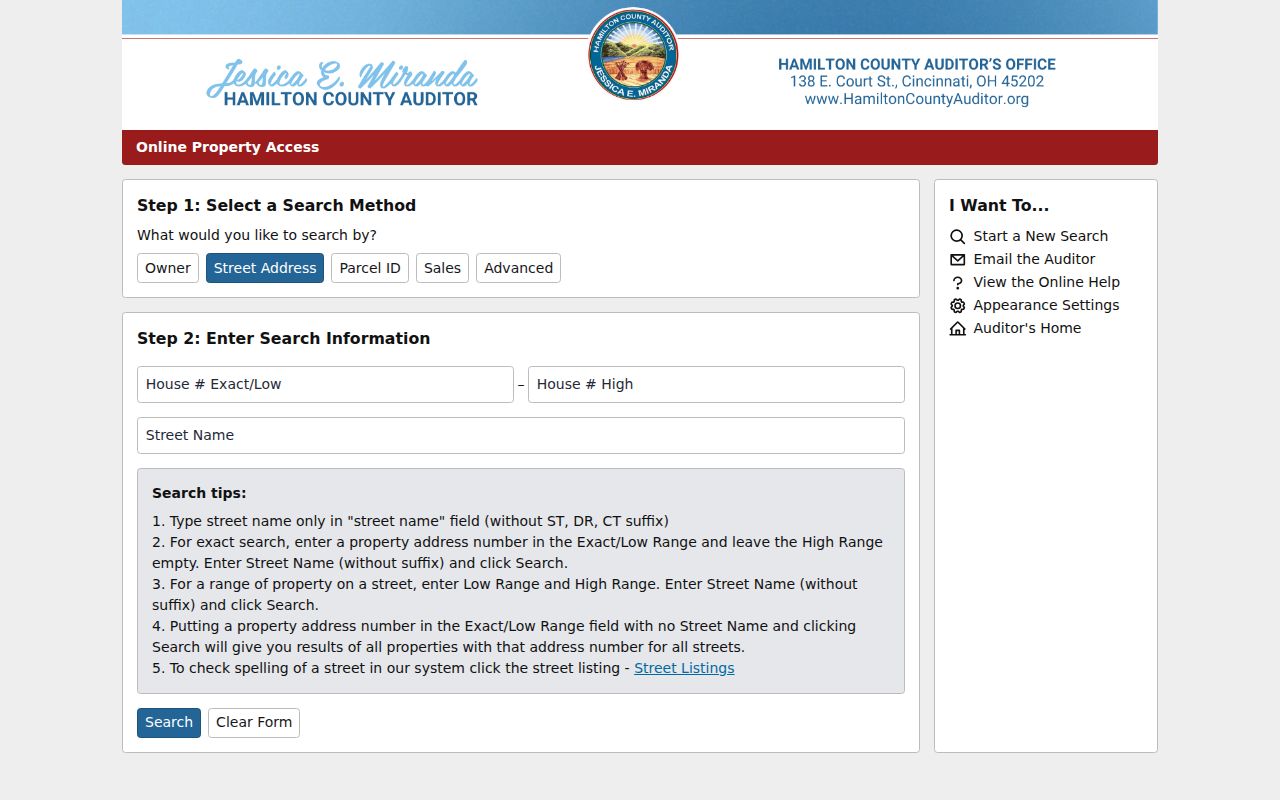
The property screen divides owner, address, parcel, sales, and advanced research rather than supplying one general resident field.
Recorder Trails for Township Names
A deed or lien search adds a document date, party role, and property link to a Springfield Township name. The Recorder’s Acclaim inquiry has current name, date, book/page, parcel, and legal-description routes. Its computerized database begins May 31, 1988. That is an online-system boundary, not the beginning of Hamilton County documents.
For earlier work, the Recorder directs researchers to historic grantor and grantee PDFs, Book/Page retrieval, office research resources, and the linked FamilySearch image collection. Follow a prior seller as a grantee to find that party’s acquisition, then test the legal description and parcel again. A recorded party may be a buyer, seller, lender, or another document participant rather than a current resident.
The Recorder office supplies the present access point. Acclaim is a document trail, not a stand-alone people directory.
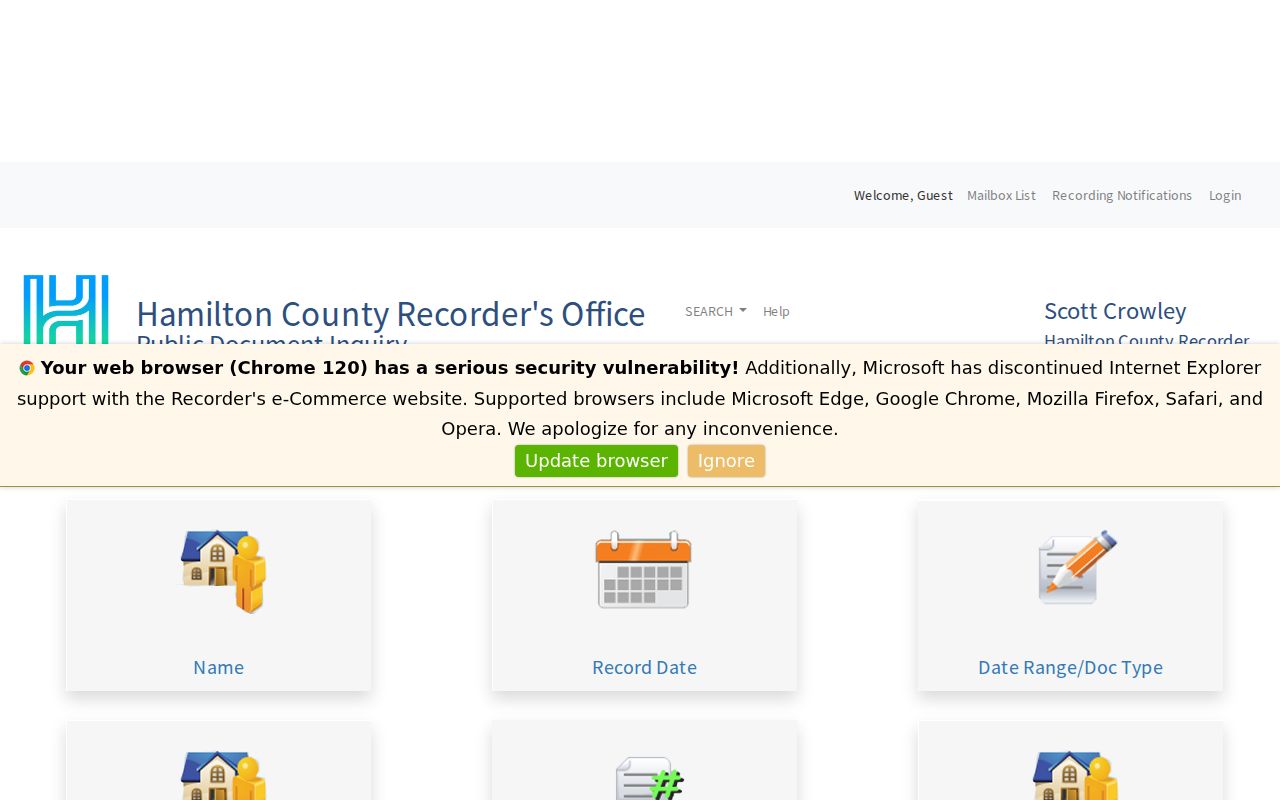
A document type, date, book/page reference, or Auditor number keeps a same-name result tied to the intended property.
Voter Checks in Springfield Township
The state voter tool is a confirmation route, not a street browser. It requires first name, last name, and county. Try a legal name, a former surname where relevant, or a common derivative when an initial search fails. A successful record can confirm registration, precinct, and polling-place information for the matching person. It does not reveal ballot choices or create a comprehensive neighborhood roster.
Hamilton County also offers voter-list exports by full export, district, or precinct, with CSV and PDF options. These are geographic election products. They do not prove that every person on a street is a current resident. Ohio Revised Code § 3503.13 protects phone, email, SSN or ID information, and confidential voter records.
The official voter form keeps its inputs narrow. That is the right approach for this source: test a specific record, then confirm its role and date.
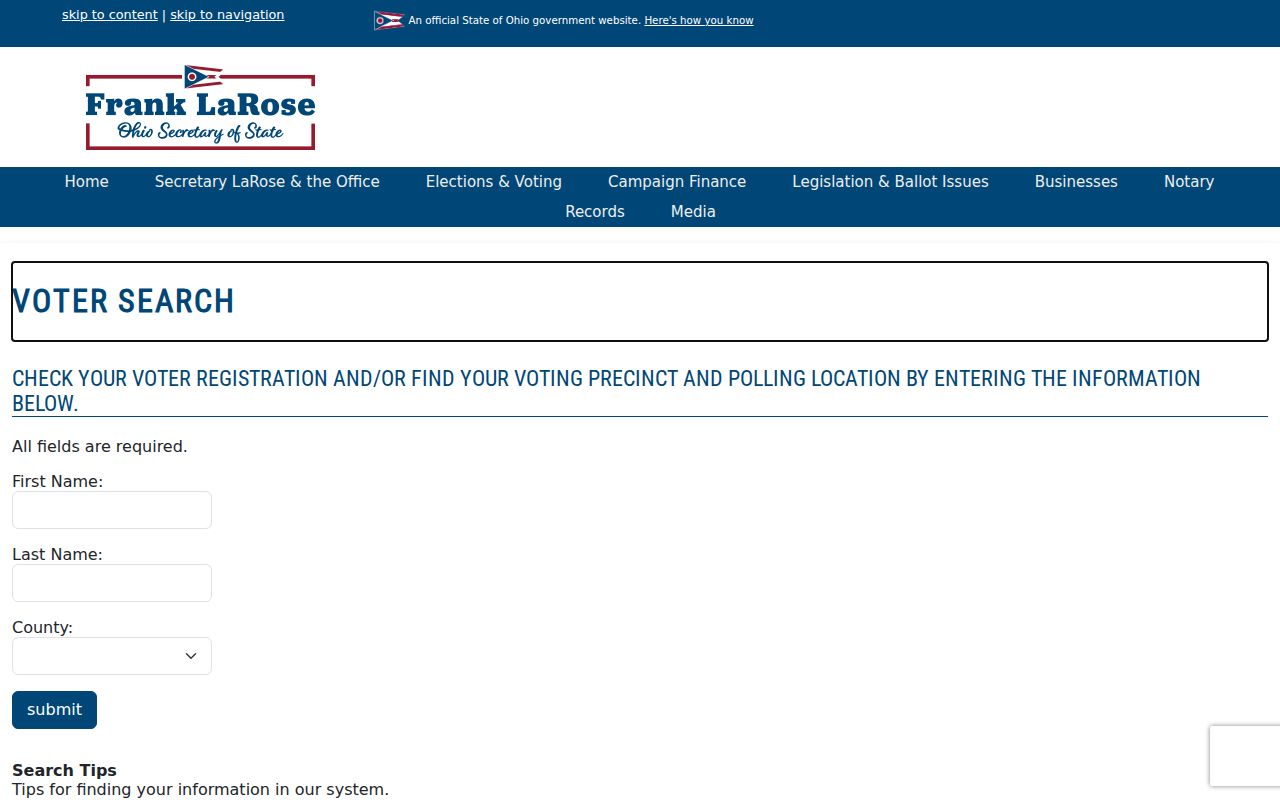
First name, last name, and Hamilton County are the required beginning fields for the state registration check.
Current Springfield Township Resident Sources
Current sources show different, limited roles. They should be read together rather than merged into a claim that every listed person lives at the same address. For a one-person question, the Springfield Township resident lookup method uses a second identifier, such as a parcel, date, case number, or relationship, before a match is treated as meaningful.
| Source | Role it can show | Custodian | Access route |
|---|---|---|---|
| Property parcel record | Deeded owner, situs, mailing, transfer context | County Auditor | Free search or office |
| Voter registration | Registration, precinct, polling-place match | State / County elections | Name plus County |
| Recorded documents | Parties to deeds, mortgages, liens, plats | County Recorder | Acclaim plus historic routes |
| Court and probate indexes | Party, case, estate, marriage, or docket lead | Clerk and Probate Court | Index, counter, or request |
| Township records | Identified local administrative or incident file | Springfield Township | Targeted request |
Ohio’s public-record law does not erase record-specific limits. Voter data excludes protected fields, and private household, utility, DMV, sealed court, and protected vital information cannot be reconstructed from these sources.
Historical Springfield Township Directories
For prior households, the strongest route is CHPL’s genealogy collection, not a Township city-clerk directory. Hamilton County directories include selected runs from 1887 through 1915 and an outside-Cincinnati county list for 1939/40. Cincinnati directories extend back to 1819 in selected digital runs. The library’s house-history guidance explains how city and county entries, maps, and newspapers can be used as time-stamped evidence.
Pink Pages began in 1925 and became the Criss-Cross Directory by 1941. Those address-first volumes put streets in alphabetical order and addresses in sequence, so they can help trace a past occupant. They are historic sources, not current resident records. The fuller collection and reading method belongs in the Springfield Township city directory resource.
Open the CHPL Genealogy & Local History collection for its directory, census, map, newspaper, church, and cemetery materials.
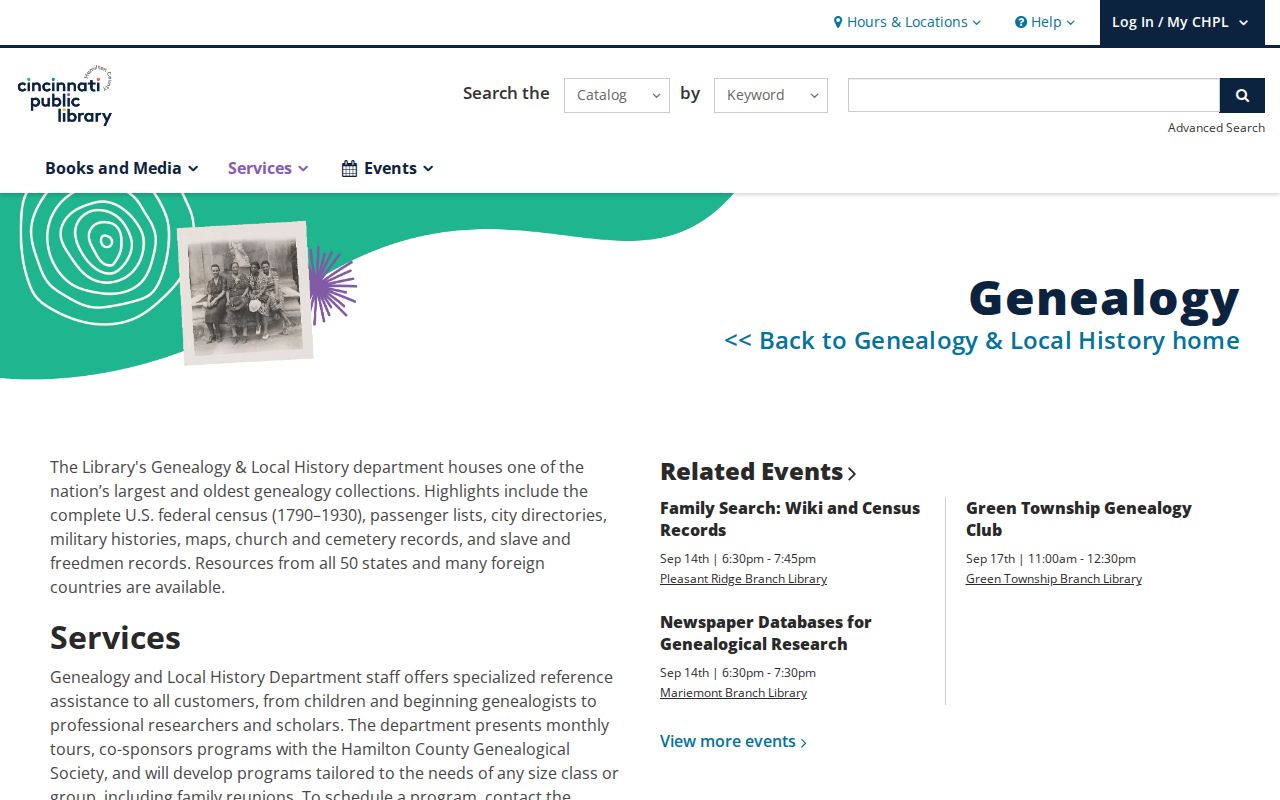
Library sources add year and role context that a current parcel screen cannot provide.
Springfield Township Court Paths
The Hamilton County Clerk of Courts and Probate Court split the court record trail. The Clerk’s records-search hub offers name, case, court-date, ticket, attorney, parcel/address, foreclosure, and historical paths for Common Pleas and Municipal matters. Probate holds estates, wills, guardianships, marriages, naturalizations, and other probate record groups. Use the court category and case date to distinguish people with the same name.
Remote files can be incomplete. The Clerk says Ohio Superintendence Rule 45(C) does not require remote access to every file or document. Its counter or copy-request path is the practical fallback when an index suggests a file that cannot be opened online. Probate’s online case index is generally 1974 forward, docket access 1993 forward, and documents 2000 forward, with archive series reaching much earlier.
Start through the Clerk’s public search hub when the question is a public court filing. The screenshot below shows the choices that separate a name query from a parcel, historical, or court-specific path.
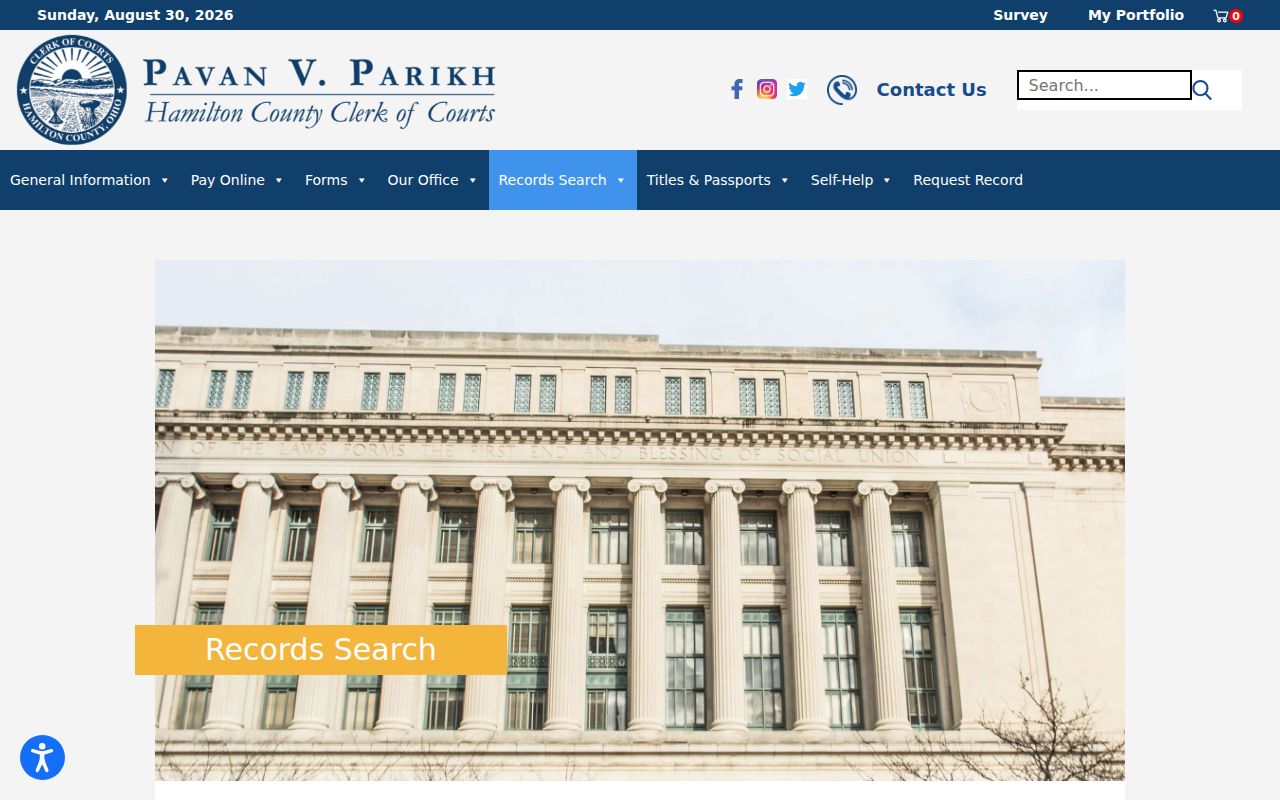
The available search modes retain case context instead of encouraging a conclusion from a same-name docket hit.
Springfield Township Vital Routes
Birth, death, and marriage research has separate custodians and access rules. Hamilton County Public Health supplies birth and death certificates through online, phone, mail, and counter channels. Its current counter is at 1701 Patricia McCollum Way, Department 93, fifth floor, Cincinnati. A same-day need belongs at the counter rather than an online order. Pre-1908 birth or death records may not exist because statewide registration was not yet compulsory.
For marriages, Probate offers its modern name index and older PDF indexes. The historic sequence runs from 1817 to 1983, while the electronic marriage index begins in 1984. A current certificate and an historic index are different products. Ohio Revised Code § 3705.23 governs vital copies and protects the specified medical and health portion of a birth record.
The County health page shown below identifies the official ordering channel. Check live instructions because the office moved in 2025 and older forms can show the previous address.
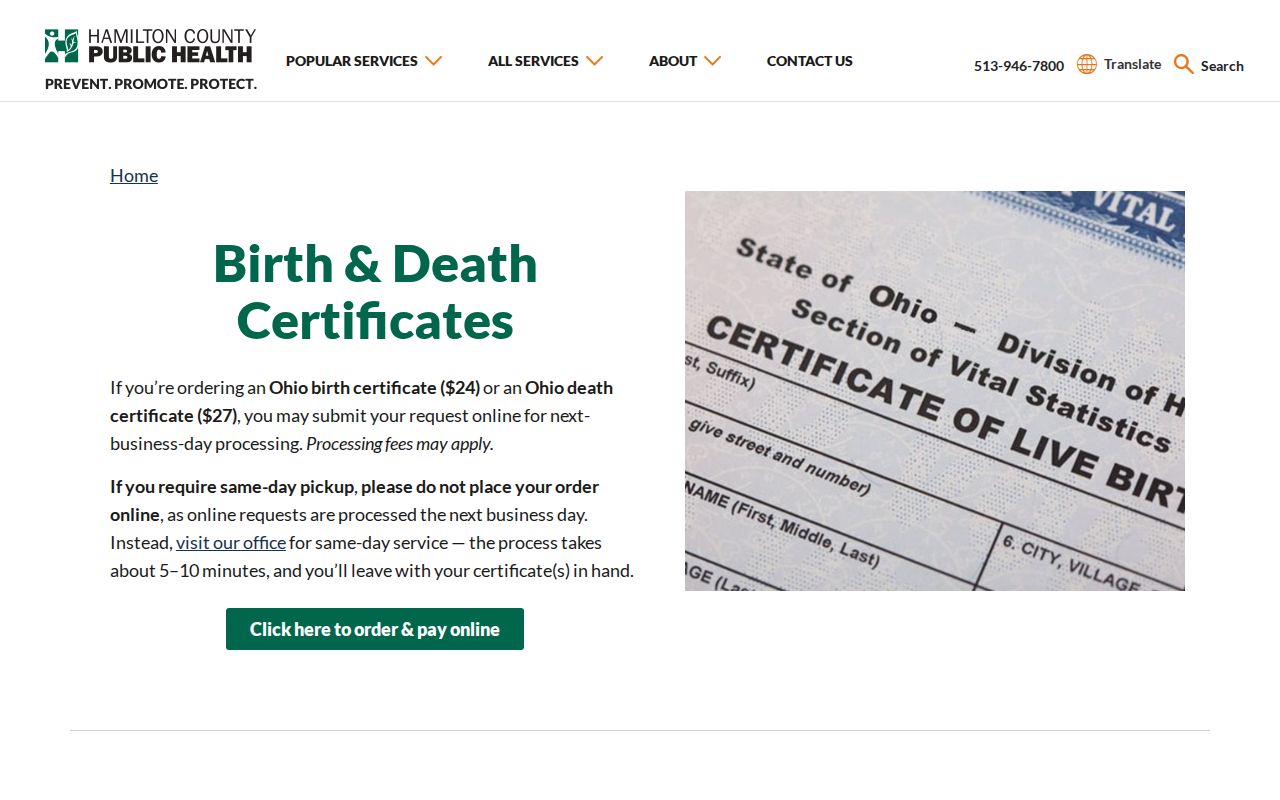
The four ordering routes make a web form only one option for a Springfield Township vital-record request.
Township Maps and Seven ZIPs
Springfield Township spans seven covering ZIP codes: 45215, 45216, 45224, 45231, 45239, 45240, and 45246. The County health profile cautions that these postal areas include neighboring communities. The Township office uses a Cincinnati 45231 mailing address, yet it remains an unincorporated Hamilton County township. A ZIP, school district, neighborhood, precinct, and Township boundary are distinct geographic keys.
Use the Township map hub to compare street, neighborhood, ZIP, school, and zoning context. Then confirm an individual delivery ZIP with the USPS lookup and check the parcel’s situs and legal description. This jurisdiction step prevents a search from being sent to the unrelated Springfield in Clark County.
The Township map page is a local way to check geography around a result. It is context for a record search, not evidence of who occupies a property.
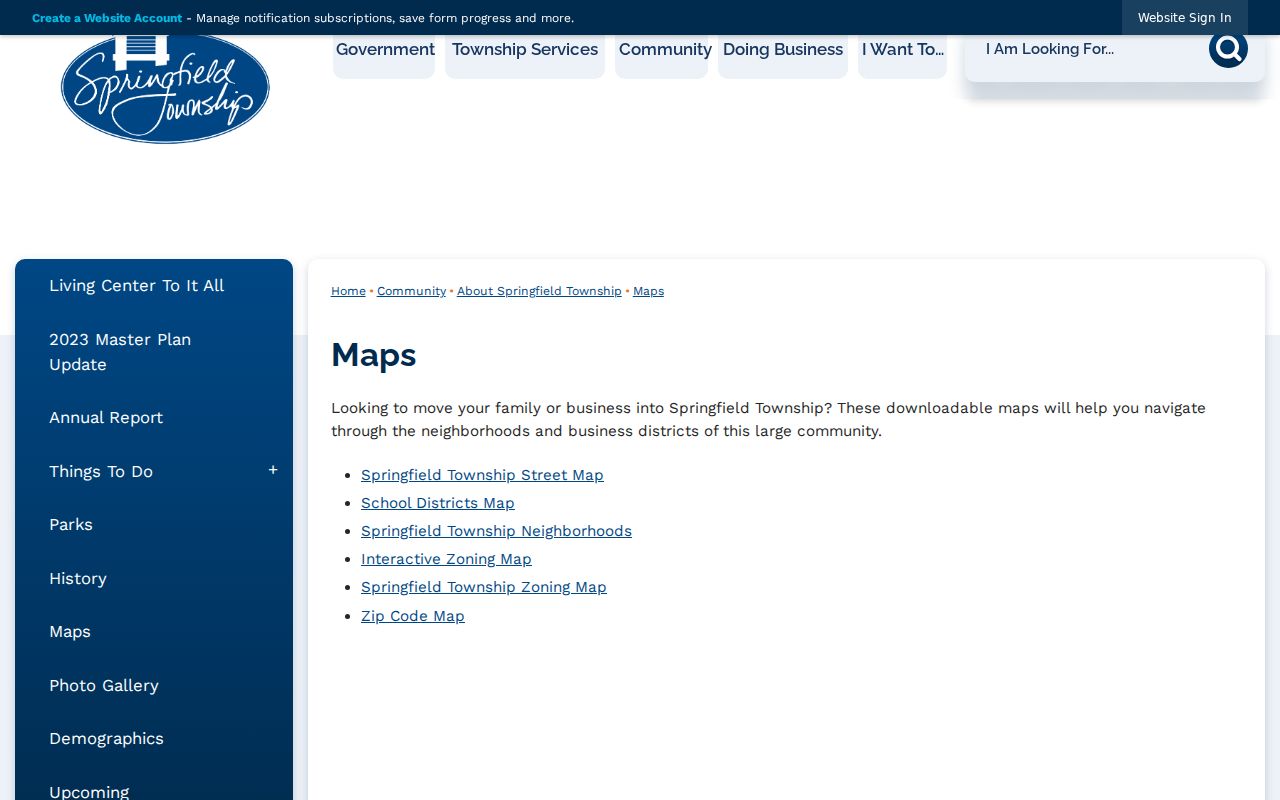
Street, neighborhood, ZIP, school, and zoning maps help resolve an address label before County records are compared.
Springfield Township Request Routes
When no searchable index exists, ask the office that owns the record. Springfield Township accepts oral or written public-records requests at its administrative offices, by phone, fax, or web form. The general form asks for a narrow record description, and identity fields are voluntary. Its policy names routine materials such as minutes, ordinances, resolutions, budgets, forms, incident reports, fire reports, and inspection material, with record-specific access limits.
Ohio’s Public Records Act, Ohio Revised Code § 149.43, generally provides inspection at no charge and copies at actual cost within a reasonable period. That does not convert every personal fact into a public record. A request for an identified zoning, code, police, fire, or Township administrative file should include a date range, address, and record type. Deeds, court files, parcel data, voter information, and vital records should go to their respective County or state custodian.
The Township request page explains the direct route. It is more reliable than a broad request sent to an office that does not keep the record.
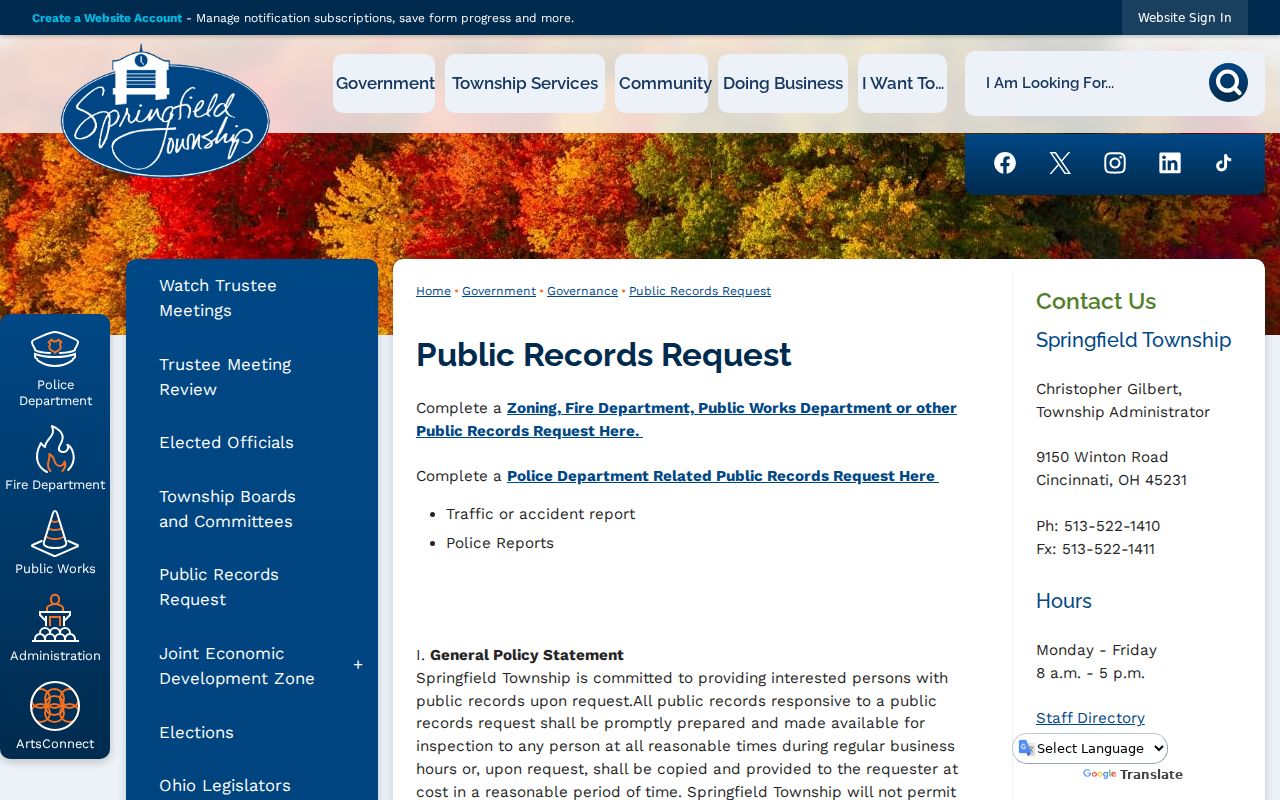
A precise subject, date range, and address make a request easier for the Township to route and answer.
Springfield Township Record Terms
Local sources use terms that change how a result should be read. Keeping the role and date with each term avoids turning an older entry into a claim about today.
- Parcel
- A County-defined unit of property used to connect a physical site, ownership data, and a legal description.
- Index
- A finding tool that points to a record or image. It is not always the complete record itself.
- Roll
- A list created for a particular government purpose, such as property assessment or voter registration.
- Criss-Cross directory
- An address-oriented directory that places a street and its addresses in sequence for a particular historic year.
For a property-by-address walk, use the Springfield Township street directory resource. It follows the parcel, Recorder, and map chain without turning a historic source into a broad current roster.
Hamilton County Historical Bridges
Hamilton County’s older trail needs date-aware searching. Recorder guidance points to deeds from 1794 forward, while the linked FamilySearch collection contains 1,566,282 images from 1791 to 1994 across land, probate, marriage, naturalization, and related records. These sources bridge the period before Acclaim’s computerized database, but each collection series has its own coverage and image rules.
Courthouse fires in 1813, 1849, and 1884 destroyed some records. A silent early index is not proof that an event did not occur. Restored Probate series, damaged-record indexes, cemetery material, church records, newspapers, and library collections can provide a better next route. Record book/page, case number, image position, and collection dates as the historical trail develops.
The Recorder’s historic-image guide connects its current office to older evidence.
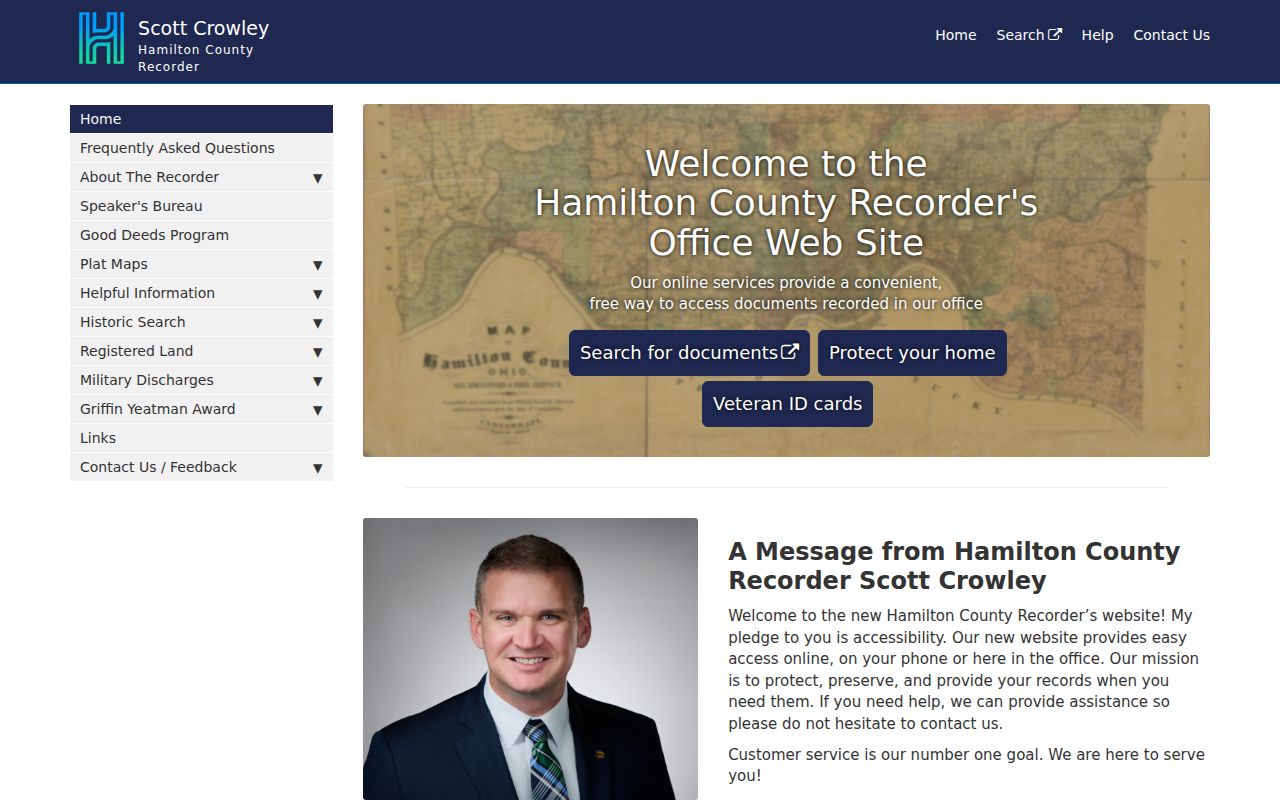
The Recorder directs older document work to historic indexes, images, and research channels.
Limits of Township Resident Records
Some gaps are intentional. Ohio Safe at Home gives eligible survivors a substitute address for voter registration and government correspondence. Ohio voter records exclude protected identifiers, and private household, utility, DMV, sealed court, confidential, and protected vital information cannot be filled in from another public roll. A deeded owner, court party, voter registration match, historic directory entry, and tax mailing address are different statements about a person.
Official records and commercial search products serve different purposes. County and state sources identify their custodian, record role, dates, fields, and access limits. A commercial service may combine old directories, marketing files, and public fragments, but it is not the office that can certify, correct, or explain a result. Compare a name across independent official records before acting on it.
The Ohio DRC Offender Search is another narrow source. It is not a Hamilton County jail roster or a current resident list, as its different status and identity fields show.
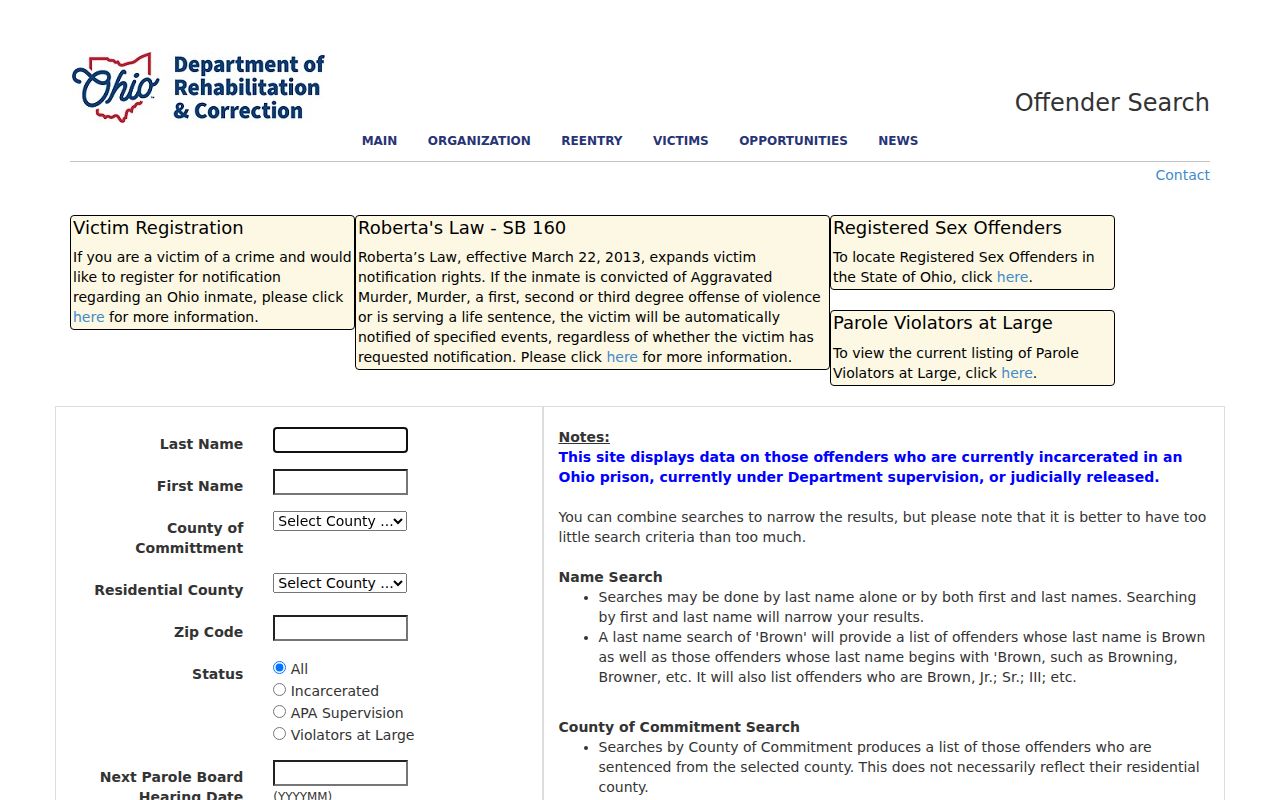
The state locator has its own fields and coverage, separate from Township property, voter, court, and historical sources.
Note: Verify an important match with the office that created the record, especially when a same name, postal label, or historic address can point to more than one person.