
Springfield Township Previous Resident Sources
Previous-resident research works best when the period sets the first source. The Hamilton County Auditor supplies the present parcel, owner of record, transfer view, ownership card, and legal description. The Recorder supplies the recorded-document trail. Directories and census schedules address the household question that a deed cannot answer. Each source has a different date range and a different meaning, so an address history should retain the exact edition, image, book/page, or database date used.
| Source | Years It Covers | Where Held | What It Shows |
|---|---|---|---|
| Auditor parcel, transfer, and ownership card | Current system; older card dates available | Hamilton County Auditor or its office | Present parcel, owner of record, transfers, and legal-description seed |
| Recorder computer database | May 31, 1988 to present | Acclaim | Modern deeds, parties, document details, and images |
| Historic Recorder and FamilySearch records | Indexes 1794–1939; deed books 1877–1901; collection 1791–1994 | Recorder historic route, office, and FamilySearch | Earlier grantor/grantee, book/page, deeds, and related images |
| Hamilton County and Cincinnati directories | County selections 1887–1915; outside-Cincinnati 1939/40; city selections 1819–1949 | CHPL Digital Library | Address, household, locality, and published directory leads |
| Pink Pages, Criss-Cross, and census | Pink Pages 1925; Criss-Cross by 1941; census 1790–1950 | CHPL and NARA resources | Address-first historic occupants and dated household snapshots |
The table is a timeline, not a single resident list. A current owner can be absent from a directory, and a listed occupant can be someone other than the person who held title. Note: An address history is strongest when every name is tied to a dated source and a recorded role.
Springfield Township Previous Parcel Starts
Use the Auditor Property Search to locate one parcel by street address. The address search accepts a bare street name, without a suffix, and an exact or low house number. Select the parcel, then retain the parcel ID, owner name, owner mailing address, legal description, and transfer data. The owner mailing address may be somewhere else, so it is a tax-contact field, not proof that the owner lived at the property.
The parcel’s legal description becomes especially important when an old directory uses a different locality label or an address changed. It can connect a lot, subdivision, section, town, or range to the Recorder’s search modes more reliably than a surname alone. CHPL’s house-history instructions place those property records alongside directories, maps, newspapers, and local indexes.
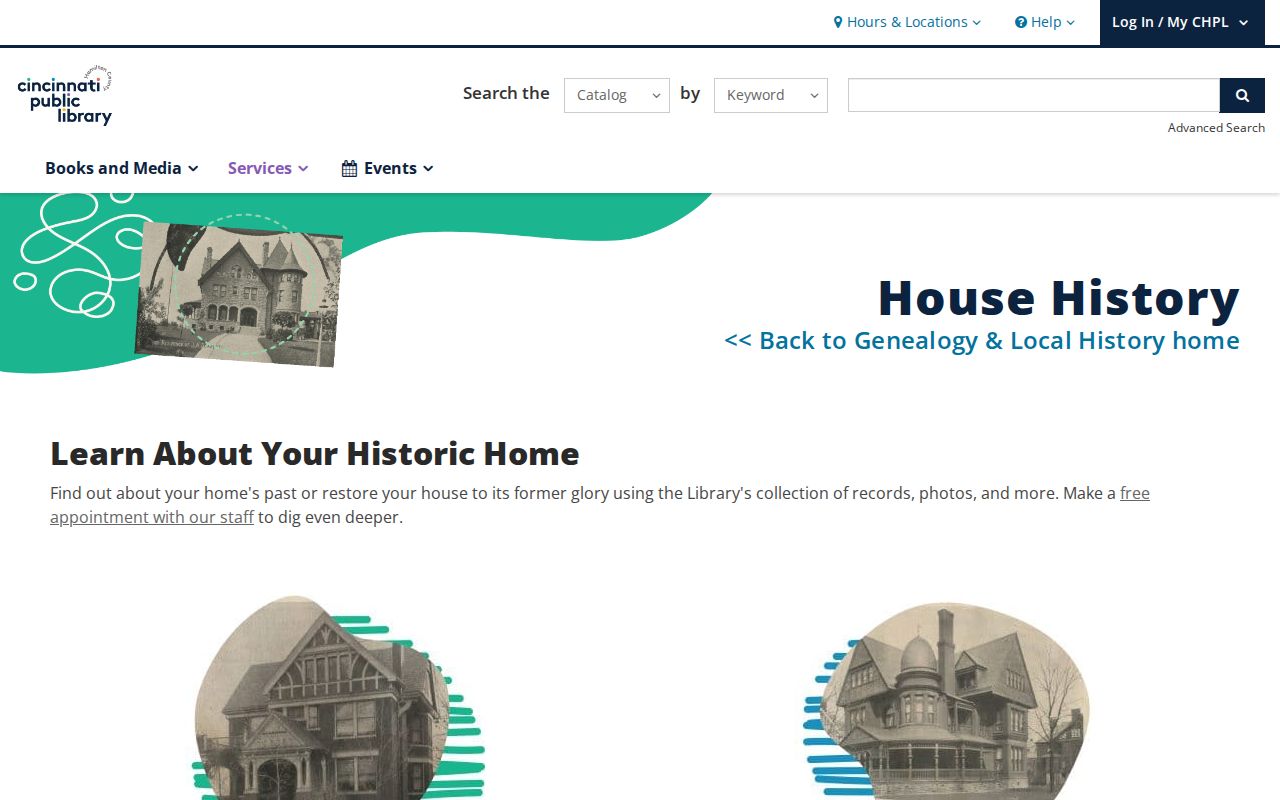
That local history route helps compare a parcel owner with a directory occupant without treating either role as the complete story.
Springfield Township Previous Ownership Cards
Before moving into deed indexes, open the selected parcel’s Transfer view and use See Ownership Card when it is available. The Auditor’s transfer data can expose older ownership names and dates as well as the legal description. A transfer date of January 1 may be a filler date rather than the actual transaction date. The ownership card is the better local check before assigning a precise date to an older change.
The Recorder’s free Recording Notification Service is separate from historical searching. It can alert a subscriber when a monitored name appears in a recorded document, but it does not prevent a recording and does not interpret the document. Its value is notice, followed by review of the actual record.
The Recorder’s notification-service information shows the distinction between a document alert and proof of any title or address claim.
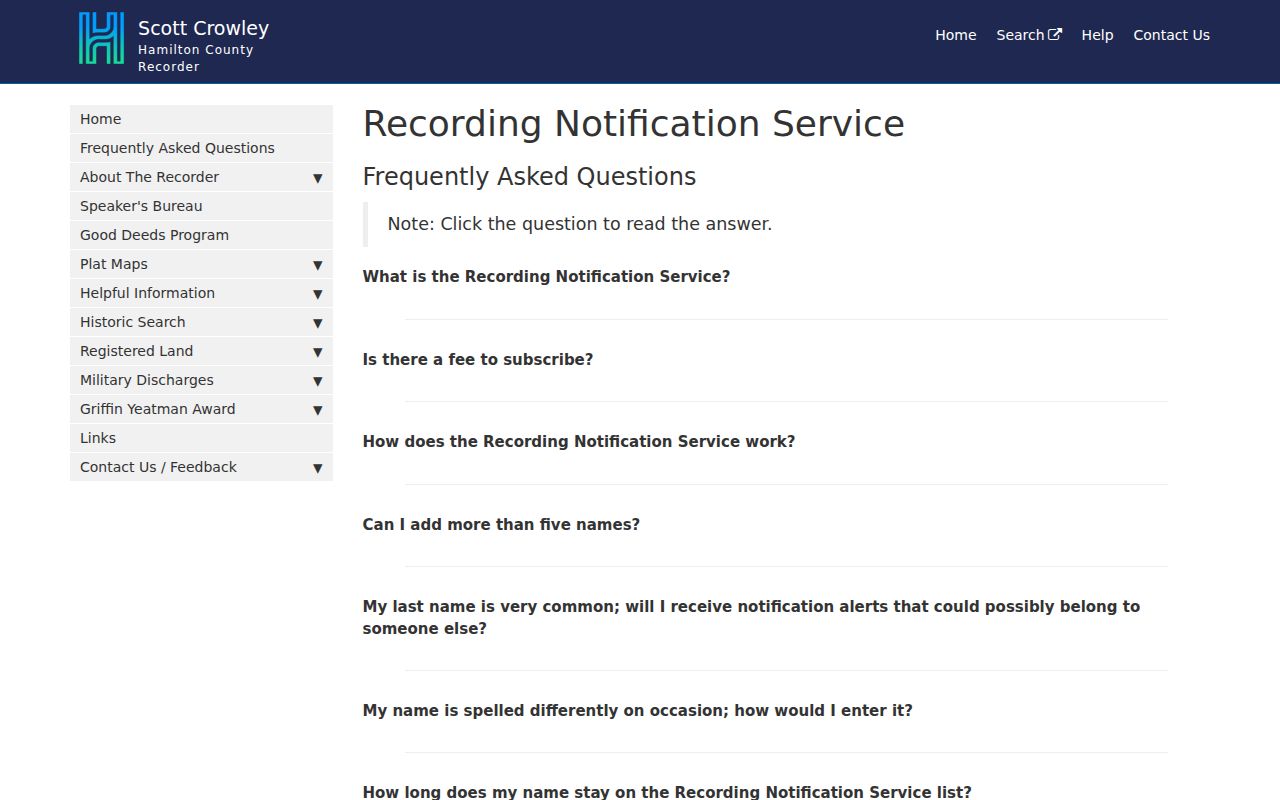
For earlier residents, the useful next step remains the parcel-linked document and its recorded parties, not the alert alone.
Springfield Township Previous Deed Chain
A chain of title is the sequence of recorded transfers for one parcel. It begins with the current acquisition and moves backward. In a deed, the grantor is the person or entity transferring an interest, and the grantee is the person or entity receiving it. Those labels show transaction roles. They do not establish that either party occupied the Springfield Township address on the recording date.
- From the Auditor parcel, record the Auditor number, legal description, current owner, and transfer information.
- Search that Auditor number or the legal description in Hamilton County Recorder Acclaim, then open the current acquisition document.
- Identify the seller in that deed. Search that prior seller as a grantee to find the earlier acquisition, then repeat backward.
- Confirm each link with the same parcel or legal description, book/page, and dates. A common surname alone is not enough.
- When the line reaches the computerized index boundary, use historic grantor/grantee PDFs, book/page research, the Recorder office, and FamilySearch rather than ending the trail.
- Grantor
- The party recorded as transferring property or another interest.
- Grantee
- The party recorded as receiving that interest. A prior seller can be searched as a grantee to locate an earlier purchase.
- Chain of title
- A parcel-specific sequence of recorded transfers, checked link by link.
- Legal description
- The lot, subdivision, or land description used in records. It is steadier than a street name when an older address is unclear.
Note: A Recorder record describes the documented transaction, not every member of a household at the address.
Springfield Township Previous Index Break
The Recorder’s current computer database begins May 31, 1988. That date is an index boundary, not the beginning of Hamilton County records. For earlier research, the official historic route offers grantor/grantee PDFs by year and surname initial. After locating a book and page, use the Book/Page path to retrieve the scan. Digitized historic images can be offset by a page or two, so an indexed document may require checking adjacent frames.
The Recorder’s FamilySearch guidance points to a large historical image route. The Ohio, Hamilton County collection contains 1,566,282 images and covers 1791–1994, with deeds, mortgages, probate, naturalizations, marriages, and cemetery-lot material among its record groups.
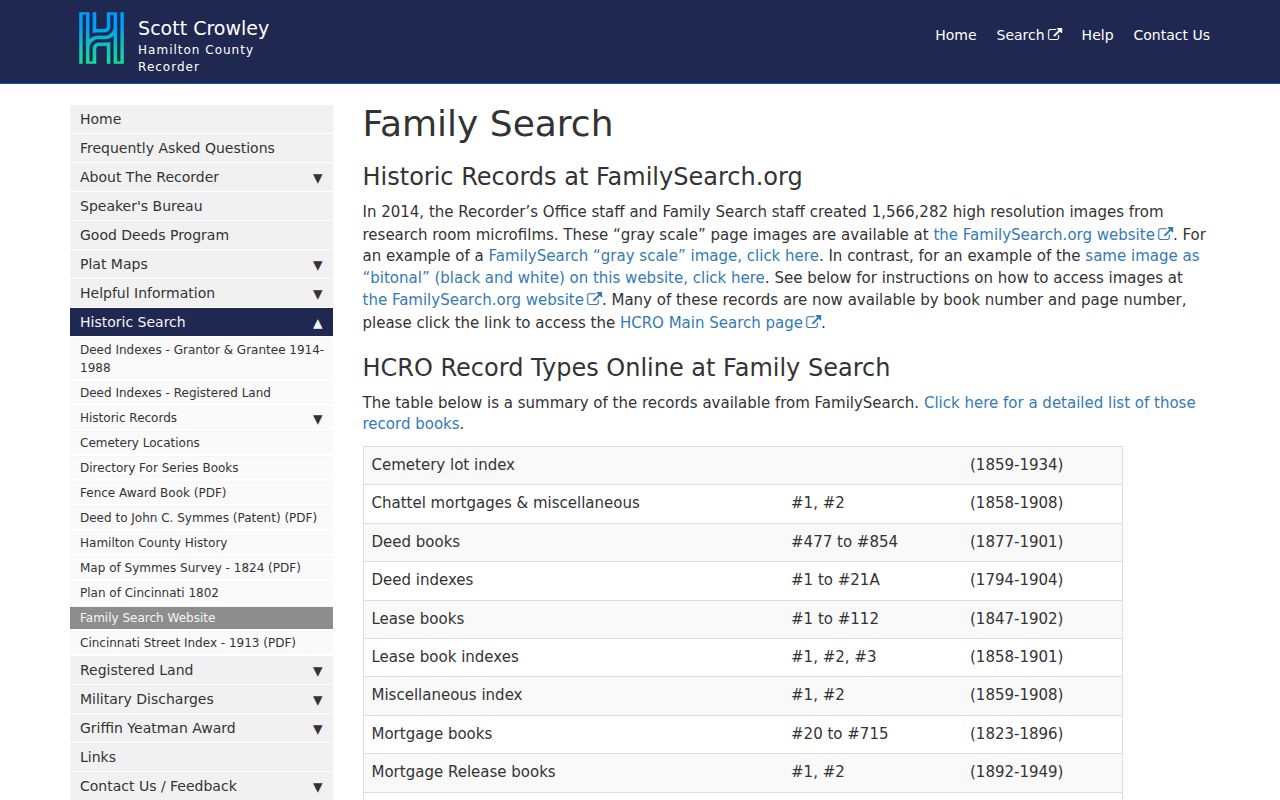
The historic path is most reliable when an image number, book/page, year, and party spelling are saved with each find.
Springfield Township Previous Address Maps
Historical address research needs a map check before one old number is equated with a present parcel. CHPL notes that most Cincinnati street addresses changed in 1895. Its 1891 Sanborn maps show old numbers, while maps from 1904 show new addresses and color-coded structure detail. That warning applies directly to records crossing city lines or historic postal labels, but it does not prove that every Springfield Township address changed in the same event.
Confirm that a map covers the exact area, then compare the street and number relationship before merging two entries. The Recorder’s historic guide adds another local fallback: permanent duplicate cards can show owners back to about 1940, with owner/address indexes and plat maps from 1940 forward. Field cards can indicate when a building was erected and first taxed as a building; older material may need an availability request.
The Recorder’s Hamilton County history guide describes these historical property-record alternatives.
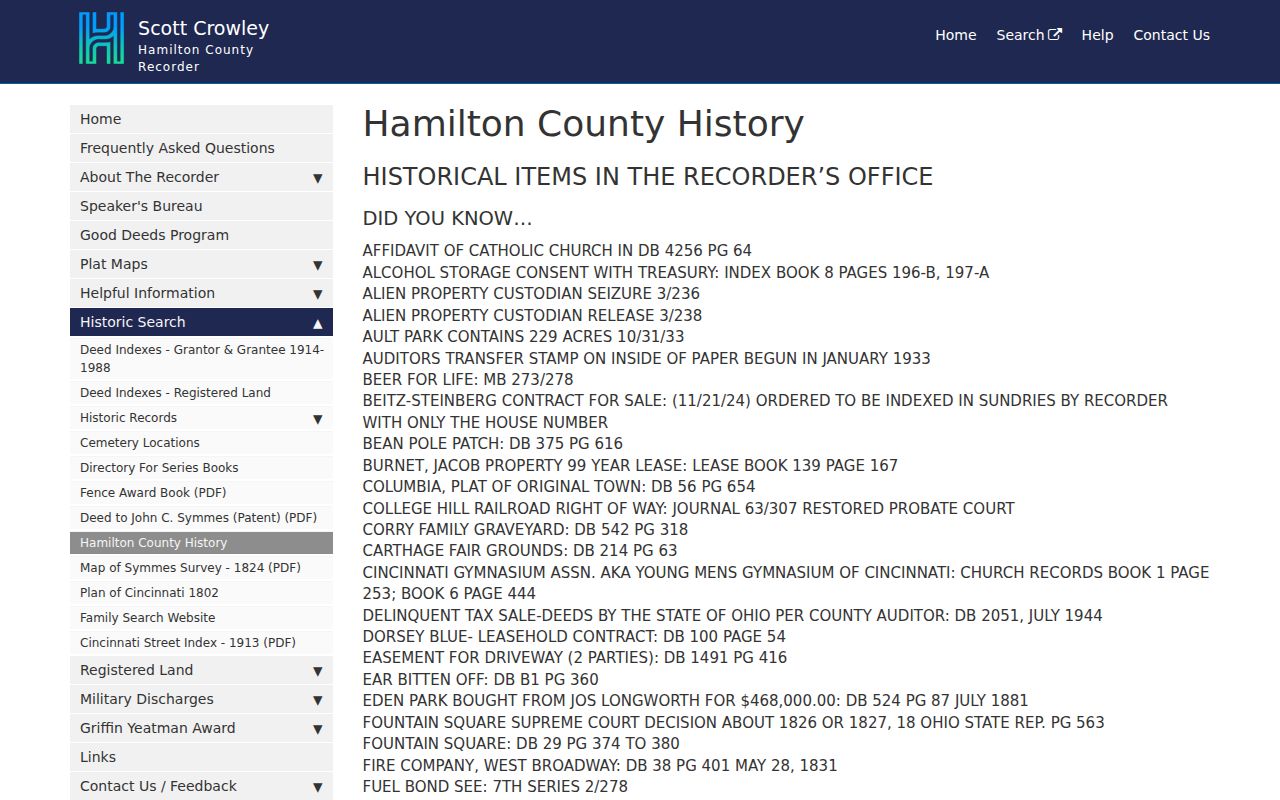
Map and card evidence can clarify a house history, but neither substitutes for validating the parcel’s legal description.
Springfield Township Previous Households
Past residents are found through household sources after the parcel trail supplies a time and address. CHPL’s Pink Pages began in 1925, and Criss-Cross directories followed by 1941. They support an address-first search for published occupants. Hamilton County directory runs include selected town and village years from 1887 through 1915 and an outside-Cincinnati run for 1939/40. The Springfield Township Directory Book holds the fuller collection context.
- Choose a directory edition nearest the ownership transfer or a known address event.
- Record the address spelling, locality heading, listed name, and edition year exactly as printed.
- Pair that annual or periodic entry with the closest federal census year, available through 1950, to test the household composition.
- Use a later directory, probate file, cemetery record, obituary, or newspaper item to corroborate a move, death, estate, or family relationship.
Marriage indexes can support a dated family-history event, but they do not prove that a couple lived at a particular house. Hamilton County Probate’s historic marriage-license index is one corroborating route for records spanning 1817–1983.
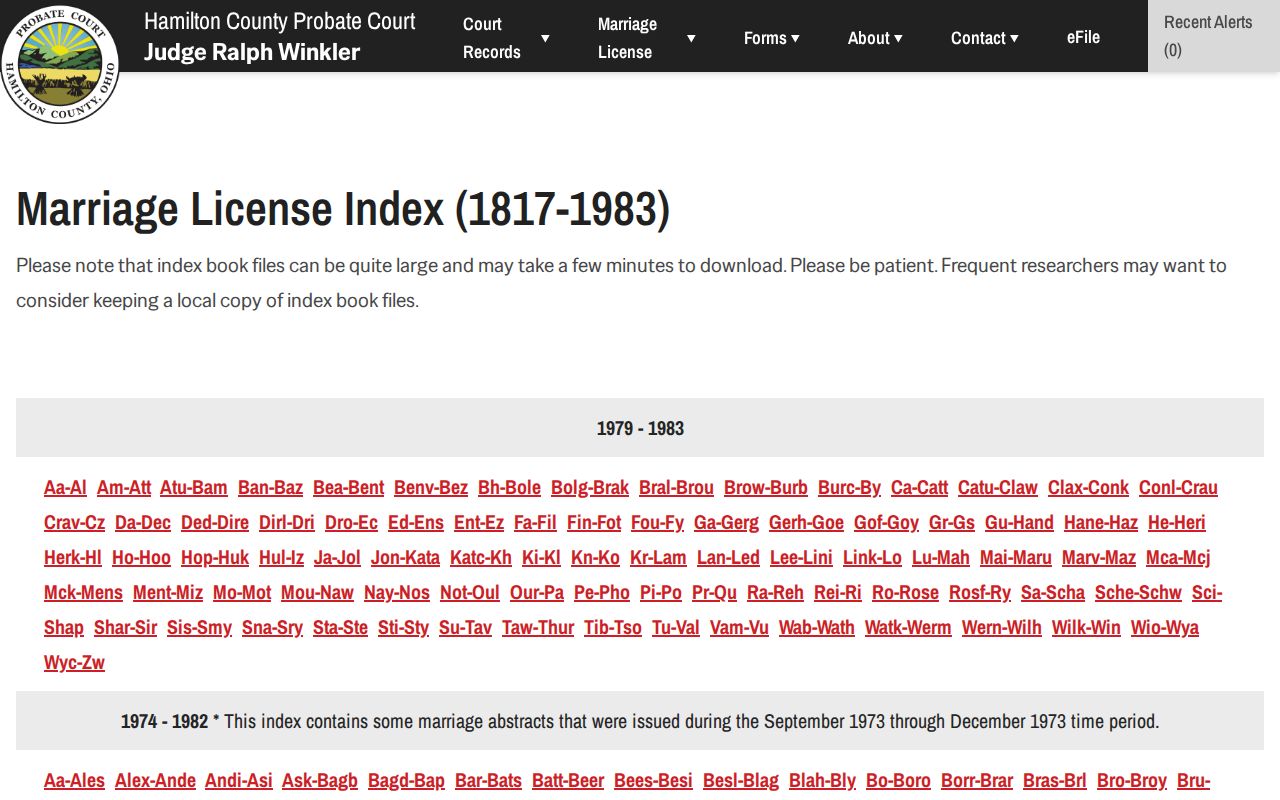
A dated directory entry paired with a census or event record is more useful than an undated name match.
Springfield Township Previous Record Restorations
Older gaps deserve a careful response. Courthouse fires in 1813, 1849, and 1884 destroyed some Hamilton County records. A silent index from that era is not proof that nothing happened. FamilySearch includes restored administration proceedings for 1884–1915, a restored appearance docket for 1860–1883, and restored administration docket, marriage, and naturalization material for 1911–1942.
For a missing deed, estate, or household clue, check the restored series, Probate archive, Hamilton County Genealogical Society damaged or mutilated-record indexes, church and cemetery material, and contemporary newspapers. Hamilton County Genealogical Society’s local-records gateway is a practical research alternative when a conventional index is incomplete. This date-led approach preserves the difference between a lost original and an unsearched substitute.
In-person research remains a real access channel. The Recorder’s historical research route is at 138 E. Court Street, Room 205, Cincinnati, and the Auditor is in the County Administration Building at 138 E. Court Street, Room 304. When the question concerns a Township zoning, property-maintenance, police, or fire record, make a focused request for the date range and record type through the Springfield Township public-records channel rather than asking for every item ever tied to the address.
Springfield Township Previous Resident Limits
Use prior-resident records for house history, family history, estate and heir research, or a documented property question. Do not use an old address entry to monitor, contact, or target a living person. A current deeded owner, former grantor, historical directory occupant, and estate party may all be different people. Records should be described by the role and date they actually show.